Curriculum Vitae

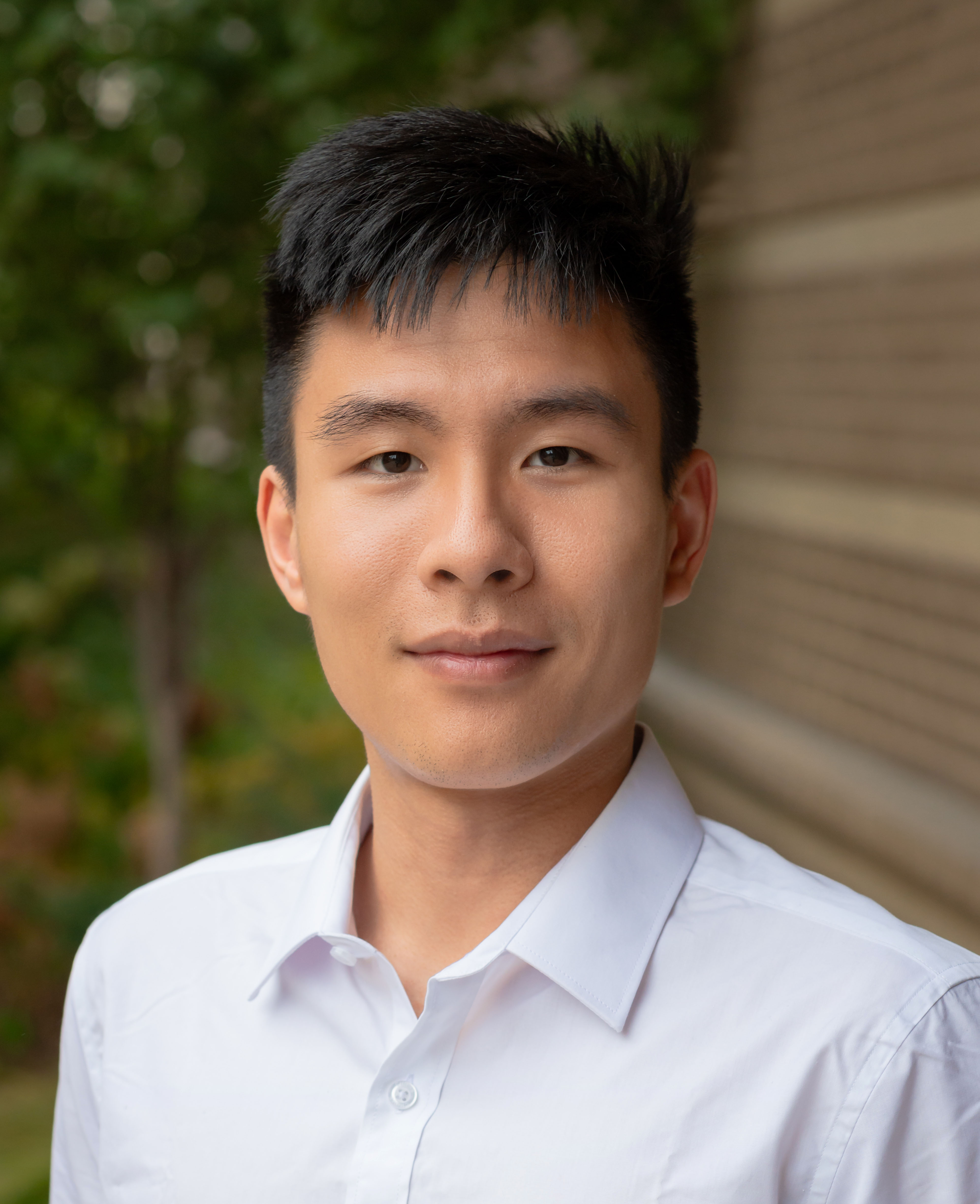
Gansheng Tan, Ph.D. Candidate

Date March 4, 2026
Affiliation Washington University School of Medicine
Department of Neurological Surgery
Address and Email 660 S Euclid Ave, St. Louis, MO 63110
g.tan@wustl.edu

Education

Washington University in St. Louis

Ph.D. in Biomedical Engineering | St. Louis, Missouri, USA
  • Advisors: Eric C. Leuthardt and Peter Brunner
  • cognitive, system, computational, and translational neuroscience
  • Thesis: Towards closed-loop neuromodulation for cognition: revealing the role of saccade-related evoked potentials in human memory encoding and elucidating the cognitive and neuroimmune mechanisms of transcutaneous auricular vagus nerve stimulation.

Shanghai Jiao Tong University

M.Eng. in Mechanical Engineering | Shanghai, China
  • Advisor: Honghai Liu
  • Graduate training in mechanical, computational, and biomedical engineering.
  • Thesis: Cortico-muscular network, a framework for motor rehabilitation after strokeand optimzing transcranial magnetic stimulation

Double Degree Program in Engineering

Diplome d'ingenieur, Paris-Saclay University | B.Eng., Shanghai Jiao Tong University
  • Diplome d'ingenieur (postgraduate degree in engineering), Paris-Saclay University, Gif-sur-Yvette, Paris, France.
  • B.Eng., Shanghai Jiao Tong University, Shanghai, China.
  • Interdisciplinary training in applied mathematics, systems engineering, signal processing, and machine learning.
  • Advisor: Antoine Lutz

Research and Professional Appointments

Graduate Student Researcher

Department of Biomedical Engineering and Neurosurgery
  • Approach: multimodal human neurophysiological recording across intracranial and scalp EEG, eye tracking, neuroimaging, single-unit activity, compound action potentials, and ECG in intraoperative, EMU, and ICU settings.
  • Bench-to-bedside validation across invasive and non-invasive neuromodulation technologies including VNS, taVNS, intracranial stimulation, temporal interference, and vibrotactile stimulation.

Research Scholar

Department of Neurosurgery | Advisors: Peter Brunner and Eric C. Leuthardt

Led a prospective clinical trial investigating the anti-inflammatory effects of transcutaneous auricular vagus nerve stimulation in subarachnoid hemorrhage patients and its neurophysiological mechanisms.

Graduate Student Researcher

Department of Rehabilitation Medicine (Ruijin Hospital) and Mechanical Engineering

Pioneered and validated a cortico-muscular network framework for optimizing neuromodulation therapy in motor rehabilitation following stroke.

Research Fellow

Lyon Neuroscience Research Center, INSERM | Advisor: Antoine Lutz

Examined how focused attention and open monitoring meditation affect attentional control and perceptual inference using EEG-based mismatch negativity paradigms.

Graduate Student Researcher

Signals and Systems Laboratory, CNRS | Advisor: Antoine Chaillet

Developed an EEG-based neurofeedback system for focused-attention meditation while building the signal-processing and machine-learning foundation for later translational neuroscience work.
Publications

Google Scholar Page

Peer-reviewed Journal Publications
  1. Tan, G., Huguenard, A. L., Donovan, K. M., Demarest, P., Liu, X., Li, Z., Adamek, M., Lavine, K., Vellimana, A. K., Kummer, T. T., Osbun, J. W., Zipfel, G. J., Brunner, P., & Leuthardt, E. C. (2025). The effect of transcutaneous auricular vagus nerve stimulation on cardiovascular function in subarachnoid hemorrhage patients: A randomized trial. eLife. https://doi.org/10.7554/elife.100088.3
    Deemed "Important" by eLife editors.
  2. Tan, G., Chen, H., & Leuthardt, E. C. (2025). Ultrasound applications in the treatment of major depressive disorder (MDD): A systematic review of techniques and therapeutic potentials in clinical trials and animal model studies. Neuromodulation: Technology at the Neural Interface. https://doi.org/10.1016/j.neurom.2025.08.001
  3. Laurido-Soto, O. J., Tan, G., Nielsen, S. S., Huguenard, A. L., Donovan, K. M., Xu, I., Giles, J., Dhar, R., Adeoye, O., Lee, J.-M., & Leuthardt, E. (2026). Transcutaneous auricular vagus nerve stimulation reduces inflammatory biomarkers after large vessel occlusion stroke: Results of a prospective randomized open-label blinded endpoint trial. Translational Stroke Research, 17(1). https://doi.org/10.1007/s12975-025-01405-6
  4. Donovan, K., Tan, G., Willie, J., Brunner, P., & Leuthardt, E. (2026). Differential gamma responses to transcutaneous auricular vagus nerve stimulation revealed by human intracranial recordings. Neuromodulation: Technology at the Neural Interface. https://doi.org/10.1016/j.neurom.2025.11.013
  5. Donovan, K., Adams, J., Park, K., Demarest, P., Tan, G., Willie, J., Brunner, P., Gorlewicz, J., & Leuthardt, E. (2025). Vibrotactile auricular vagus nerve stimulation alters limbic system connectivity in humans: A pilot study. PLOS One, 20(5), e0310917. https://doi.org/10.1371/journal.pone.0310917
  6. Tan, G., Adams, J., Donovan, K., Demarest, P., Willie, J. T., Brunner, P., Gorlewicz, J. L., & Leuthardt, E. C. (2024). Does vibrotactile stimulation of the auricular vagus nerve enhance working memory? A behavioral and physiological investigation. Brain Stimulation, 17(2), 460-468. https://doi.org/10.1016/j.brs.2024.04.002
  7. Huguenard, A., Tan, G., Rivet, D., Gao, F., Johnson, G., Adamek, M., Coxon, A., Kummer, T., Osbun, J., Vellimana, A., Limbrick, D., Zipfel, G., Brunner, P., & Leuthardt, E. (2025). Auricular vagus nerve stimulation for mitigation of inflammation and vasospasm in subarachnoid hemorrhage: a single-institution randomized controlled trial. Journal of Neurosurgery, 1-12. https://doi.org/10.3171/2024.10.jns241643
  8. Huguenard, A., Tan, G., Johnson, G., Adamek, M., Coxon, A., Kummer, T., Osbun, J., Vellimana, A., Limbrick Jr, D., Zipfel, G., Brunner, P., & Leuthardt, E. (2024). Non-invasive auricular vagus nerve stimulation for subarachnoid hemorrhage (NAVSaH): protocol for a prospective, triple-blinded, randomized controlled trial. PLOS ONE, 19(8), e0301154. https://doi.org/10.1371/journal.pone.0301154
  9. Liu, J., Wang, J., Tan, G., Sheng, Y., Feng, L., Tang, T., Li, X., Xie, Q., Liu, H., & Wei, Y. (2024). A generalized cortico-muscular-cortical network to evaluate the effects of three-week brain stimulation. IEEE Transactions on Biomedical Engineering, 71(1), 195-206. https://doi.org/10.1109/tbme.2023.3294509
  10. Sheng, Y., Wang, J., Tan, G., Chang, H., Xie, Q., & Liu, H. (2024). Muscle synergy plasticity in motor function recovery after stroke. IEEE Transactions on Neural Systems and Rehabilitation Engineering, 32, 1657-1667. https://doi.org/10.1109/tnsre.2024.3389022
  11. Tan, G., Wang, J., Liu, J., Sheng, Y., Xie, Q., & Liu, H. (2022). A framework for quantifying the effects of transcranial magnetic stimulation on motor recovery from hemiparesis: corticomuscular network. Journal of Neural Engineering, 19(2), 026053. https://doi.org/10.1088/1741-2552/ac636b
  12. Liu, J., Tan, G., Wang, J., Wei, Y., Sheng, Y., Chang, H., Xie, Q., & Liu, H. (2022). Closed-loop construction and analysis of cortico-muscular-cortical functional network after stroke. IEEE Transactions on Medical Imaging, 41(6), 1575-1586. https://doi.org/10.1109/tmi.2022.3143133
  13. Sheng, Y., Tan, G., Liu, J., Chang, H., Wang, J., Xie, Q., & Liu, H. (2022). Upper limb motor function quantification in post-stroke rehabilitation using muscle synergy space model. IEEE Transactions on Biomedical Engineering, 69(10), 3119-3130. https://doi.org/10.1109/tbme.2022.3161726
  14. Tan, G., Xu, K., Liu, J., & Liu, H. (2022). A trend on autism spectrum disorder research: eye tracking-EEG correlative analytics. IEEE Transactions on Cognitive and Developmental Systems, 14(3), 1232-1244. https://doi.org/10.1109/tcds.2021.3102646
  15. Liu, J., Tan, G., Sheng, Y., Wei, Y., & Liu, H. (2022). A novel delay estimation method for improving corticomuscular coherence in continuous synchronization events. IEEE Transactions on Biomedical Engineering, 69(4), 1328-1339. https://doi.org/10.1109/tbme.2021.3115386
  16. Liu, J., Tan, G., Sheng, Y., & Liu, H. (2021). Multiscale transfer spectral entropy for quantifying corticomuscular interaction. IEEE Journal of Biomedical and Health Informatics, 25(6), 2281-2292. https://doi.org/10.1109/jbhi.2020.3032979
  17. Liu, J., Wang, J., Tan, G., Sheng, Y., Chang, H., Xie, Q., & Liu, H. (2021). Correlation evaluation of functional corticomuscular coupling with abnormal muscle synergy after stroke. IEEE Transactions on Biomedical Engineering, 68(11), 3261-3272. https://doi.org/10.1109/tbme.2021.3068997
Preprints Under Review
  1. Tan, G., Demarest, P., Li, Y., Cho, H., Park, H., Swift, J. R., Inman, C. S., Manns, J. R., Hamann, S. B., Liu, X., Wahlstrom, K. L., Li, Z., Hollearn, M. K., Campbell, J. M., Cettina, P. E., Sivakumar, S. S., Leuthardt, E. C., Willie, J. T., & Brunner, P. (2025). Mind's eye: saccade-related evoked potentials support visual encoding in humans. Cold Spring Harbor Laboratory. https://doi.org/10.1101/2025.11.11.25339896
  2. Tan, G., Laurido-Soto, O., Huguenard, A., Dhar, R., Lee, J., & Leuthardt, E. (2026). Neuroaxonal injury dynamics after acute ischemic stroke and their modulation by transauricular vagus nerve stimulation: results of a prospective randomized open-label blinded endpoint trial NUVISTA.
Peer-reviewed Conference Papers and Proceedings
  1. Tan, G., Wang, S., Vierge, V., Mu, W., Wang, M., Greco, L., Mounier, H., & Chaillet, A. (2022). An EEG classifier to discriminate between focused attention meditation and problem-solving. 2022 IEEE International Conference on Systems, Man, and Cybernetics (SMC), 1954-1960. https://doi.org/10.1109/smc53654.2022.9945079
    Full-length paper.
  2. Tan, G., Wang, J., Liu, J., Sheng, Y., Xie, Q., Brunner, P., & Liu, H. (2022). Towards individualized transcranial magnetic stimulation for motor recovery from hemiparesis: study of corticomuscular network. Neurorehabilitation and Neural Repair, 36(9), NP1-NP38. https://doi.org/10.1177/15459683221123387
  3. Huguenard, A., Tan, G., Johnson, G., Adamek, M., Coxon, A., Zipfel, G., Vellimana, A., Brunner, P., & Leuthardt, E. (2023). O-055 Non-invasive auricular vagus nerve stimulation following spontaneous subarachnoid hemorrhage reduces rates of radiographic vasospasm and hospital-acquired infections. SNIS 20th annual meeting oral abstracts, A43-A44. https://doi.org/10.1136/jnis-2023-snis.55
  4. Liu, J., Tan, G., Sheng, Y., Wang, J., Lu, W., & Liu, H. (2020). Delay estimation for cortical-muscular interaction via the rate of voxel change. 2020 IEEE International Conference on Systems, Man, and Cybernetics (SMC), 3897-3902. https://doi.org/10.1109/smc42975.2020.9282946
    Full-length paper.
Patents
  1. Tan, G., Leuthardt, E., Brunner, P. (2025). Brain-Computer Interface for Monitoring and Modulating Neural States Based on Saccade-Related Neural Dynamics. U.S. Provisional Patent Application No. 63/910,588, filed November 3, 2025.

Selected Invited Talks and Presentations

Selected Talks
  1. Speaker. 2025 U.S. National Science Foundation Collaborative Research in Computational Neuroscience PI Meeting, UC San Diego. Title: "Saccade-Related Evoked Potentials and Their Role in Human Visual Encoding".
  2. Invited talk. 2025 Cognitive, Computational, and Systems Neuroscience Pathway Retreat, Washington University in St. Louis. Title: "Understanding and interfacing human cognition: from neurophysiology to neurostimulation".
  3. Seminar speaker. School of Computer Science and Engineering, Nanyang Technological University, Singapore, 2021. Hosted by Prof. Cuntai Guan. Title: "The interaction between cortical oscillation and muscle synergies".
  4. Symposium speaker. 30th Annual Graduate Research Symposium, Washington University in St. Louis, 2025. Title: "Transcutaneous Auricular Vagus Nerve Stimulation Reduces Inflammatory Biomarkers and May Improve Outcomes after Large Vessel Occlusion Strokes: Results of the Randomized Clinical Trial NUVISTA".
Conference Presentations
  1. Presenter, 2025 Society for Neuroscience Annual Meeting, San Diego, USA.
    Tan, G., et al. The relationship between ongoing oscillatory activity and saccade-related evoked potentials in humans; and co-authored work on face processing in fusiform regions.
  2. Presenter, 2025 American Epilepsy Society Annual Meeting, Atlanta, USA.
    Co-authored work on distinguishable evoked response profiles in scalp EEG during intraoperative stimulation of the centromedian nucleus of the thalamus.
  3. Presenter, 2024 Society for Neuroscience Annual Meeting, Chicago, USA.
    Presentations on eye movement and medial temporal lobe activity, taVNS effects during spatial working memory, single-neuron activity during memory retrieval, visual processing localization, cingulate modeling from scalp EEG, and acute effects of cervical VNS.
  4. Presenter, 2023 Society for Neuroscience Annual Meeting, Washington, D.C., USA.
    Working memory improvement with vibrotactile auricular stimulation and co-authored work on memory-enhancing amygdala stimulation.
  5. Presenter, 2022 Society for Neuroscience Annual Meeting, San Diego, USA.
    The interaction between cortical oscillation and muscle synergies in patients with hemiparesis.

Honors and Awards

  • 2026 Translational Neuroscience and Neurotechnology Training Program Fellow, Washington University in St. Louis, United States
  • 2025 Biomedical Engineering Teaching Award, Washington University in St. Louis, United States
  • 2024 Best Scientific Abstract Award, Neurocritical Care Society, United States
  • 2021 China National Scholarship (top 0.5%)

Academic Service and Committees

  • Editor, BMC Biomedical Engineering (2024- )
  • Selection Committee Member, IEEE International Conference on Systems, Man, and Cybernetics conference proceedings (2022- )
  • Reviewer, American Junior Academy of Science Symposium, American Association for the Advancement of Science

Reviewer for Scientific Journals

  • IEEE Transactions on Cybernetics
  • IEEE Transactions on Medical Imaging
  • IEEE Journal of Biomedical and Health Informatics
  • NeuroImage
  • Neuromodulation: Technology at the Neural Interface
  • iScience
  • Progress in Biomedical Engineering
  • Journal of Neural Engineering
  • Computer Science Review
  • NeuroImage: Reports
  • PLOS ONE
  • Journal of NeuroEngineering and Rehabilitation
  • Biomedical Physics and Engineering Express
  • Scientific Reports
  • Displays

Open-source Software

Industry Translation

  • Transauricular vagus nerve stimulation device for reducing inflammation, Aurenar Inc. (under review for FDA Breakthrough Devices Program).

Teaching, Leadership Activities, and STEM Outreach

  • 2024-2026 Research mentor, Division of Neurotechnology, Washington University School of Medicine. Mentored Tianshu Tan in intracranial electrophysiology; project resulted in a first-author Society for Neuroscience abstract.
  • 2026 Reviewer, Junior Academy Student Research Colloquium, St. Louis Public Library.
  • 2025 Teaching team instructor, Young Scientist Program, Washington University School of Medicine. Co-led physiology lessons for K-12 classrooms to broaden STEM participation among historically underserved students.
  • 2024 Educator, Amazing Brain Carnival, SciFest, St. Louis Science Center. Designed and facilitated interactive neuroscience demonstrations for public audiences.
  • 2024 Teaching Assistant, BME 5400 Biomedical Data Science, Washington University in St. Louis.
  • 2021-2022 Instructor, 1SL1000 Convergence, Integration, Probability, and Partial Differential Equation, CentraleSupelec.
  • 04/2018 - 05/2018 Representative Student, Department of Engineering, University of Cambridge. Exchanged engineering expertise and fostered cultural understanding between the University of Cambridge and CentraleSupelec.
  • 10/2017 - 06/2018 Project Manager, Tech for Good Initiative, Ile-de-France, France. Led the development of La Condamine, a platform supporting artist-entrepreneurs. https://lacondamine.org

Professional Societies

  • IEEE
  • American Society of Neurorehabilitation
  • Society of Neuroscience

Skills

  • Software and systems engineering: Python, R, MATLAB, GitHub, Java, C/C++, HTML, CSS
  • Biosignal processing and analysis
  • Artificial intelligence and advanced statistics
  • Clinical and translational research
  • Cognitive and systems neuroscience, neurophysiology
  • Technological translation and intellectual property management
  • Scientific writing and presentation: Adobe Illustrator, MS Office, LaTeX

Languages

  • English: fluent
  • Chinese: native
  • French: proficient