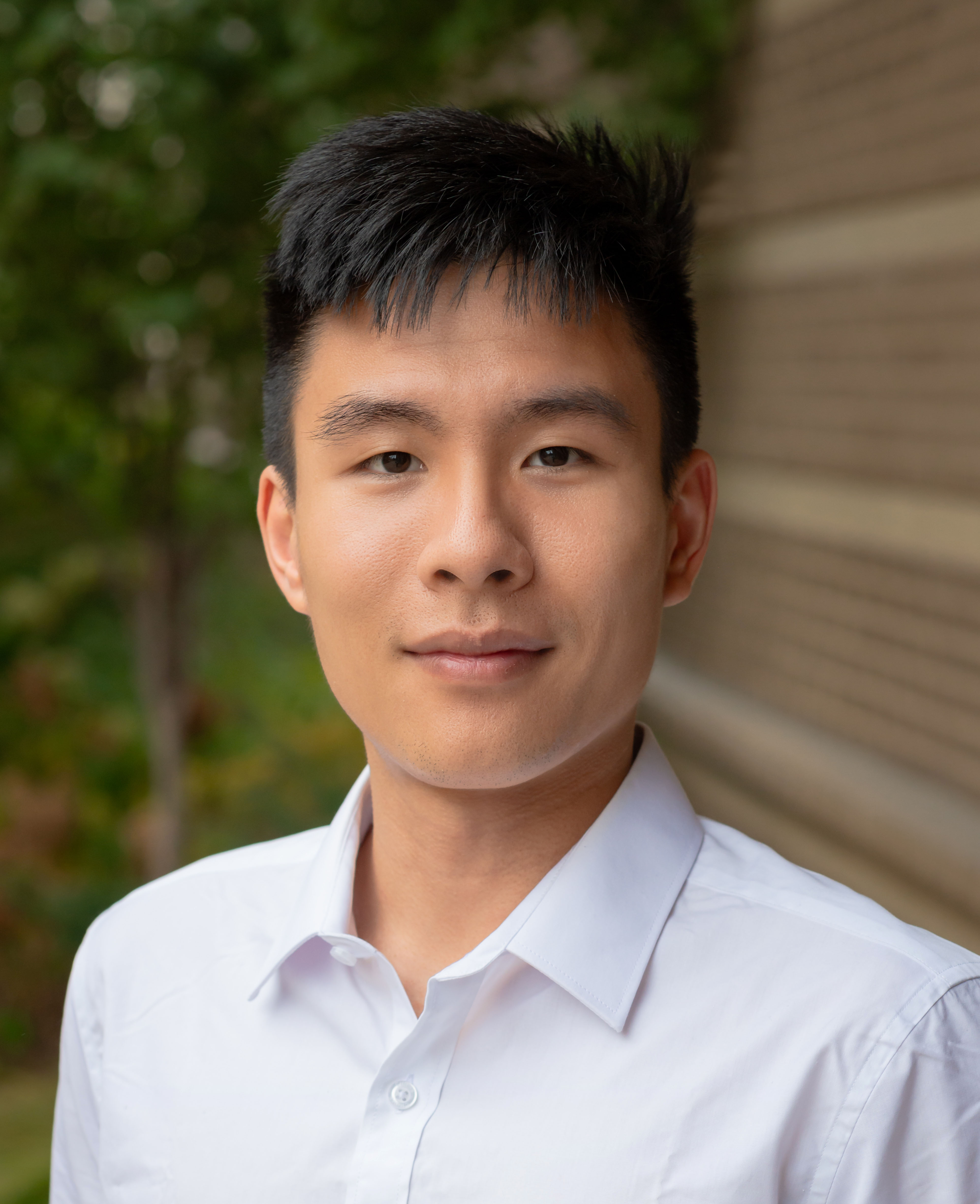
I study human intelligence in an age of machine intelligence.
Human intelligence has inspired many of today’s most powerful technologies, from computer vision to large language models. Machine intelligence can scale its infrastructure: data, memory, processors, and power, to solve defined problems. In contrast, humans navigate a changing world through a biological system that is powerful yet constrained: a brain with limited resources, embedded in a body that is constantly moving and sensing.
As technology transforms work, education, and communication, people are expected to learn faster, make decisions faster, and manage the complex output of machine intelligence. This challenge cannot be solved by education alone, nor can we assume that biological adaptation will keep pace with technological advance. We need to understand how human intelligence is organized and develop technology to support it. This is especially urgent given the aging population and the nervous system’s vulnerability to injury and disease. My research seeks to understand human intelligence through bodily movement and explores how neurotechnology can help sustain, restore, and extend cognitive function.
Rhythms of Cognition
The human brain accomplishes something we rarely pause to appreciate: it supports a wide range of cognitive functions including perception, attention, memory and speech, within a single, limited neural system. How does the brain coordinate neural computation in time to support these functions? My research suggests one solution is to align neural activity with bodily rhythms, such as eye movements, breathing, and the heartbeat. I have found that each shift in gaze is accompanied by a spatially structured neural response supporting memory encoding.
Bodily rhythms carry information about when sensory input is likely to arrive or when internal states are likely to change, providing the brain with a reliable temporal scaffold for organizing computation. Combining electrophysiology with eye-tracking, I aim to characterize how neural dynamics coordinate with bodily rhythms and how this coordination shapes human cognition.
Neurotechnology for cognitive health
Cognitive dysfunction in aging and acquired brain injury is an increasingly urgent challenge as the population ages. I pursue two complementary translational strategies: (1) neuromodulation to preserve and restore function by engaging existing neural circuitry and (2) brain-computer interface (BCI) to decode, supplement, or replace neural processing for cognition. Toward these goals, I develop computational methods that dissociate neural patterns underlying cognitive processes to support brain computer interface compensating or replacement of impaired function; and study mechanisms of action of several neural stimulation, including transcranial magnetic stimulation (TMS), transcutaneous auricular vagus nerve stimulation (taVNS), and low-intensity focused ultrasound. These efforts define what, when and how to interface with the brain for cognitive health.
Biography
I am a PhD candidate in Biomedical Engineering at Washington University in St. Louis in the labs Eric Leuthardt and Peter Brunner. I am affiliated with National Center for Adaptive Neurotechnologies and Division of Neurotechnology at Washington University in St. Louis. I am a fellow of Translational Neuroscience and Neurotechnology Training Program.
Before joining Washington University in St. Louis, I completed an international dual-degree program in engineering between Shanghai Jiao Tong University and CentraleSupélec (Paris-Saclay University), earning a B.Eng. from Shanghai Jiao Tong University and a Diplome d'ingenieur from CentraleSupélec, followed by an M.Eng. in Mechanical Engineering from Shanghai Jiao Tong University in 2022. As part of my dual-degree training, I conducted research at INSERM U1028 Centre de Recherche en Neurosciences de Lyon and was a research fellow at L2S: Laboratoire des signaux et systemes. Before beginning my doctoral training, I also served as a visiting scholar in the Department of Neurosurgery at Washington University in St. Louis.
Selected Awards
- 2026 Outstanding Research Award, Washington University in St. Louis
- 2025 Biomedical Engineering Teaching Award, Washington University in St. Louis
- 2024 Best Scientific Abstract Award, Neurocritical Care Society
- 2021 China National Scholarship